- Bagel Bots
- Posts
- The Prompt That Designs a One-Person Business
The Prompt That Designs a One-Person Business
A step-by-step AI workflow that builds a real business you can run alone — and scale.

Michael Kramer
January 23, 2026
In partnership with

AI MARKET PULSE
AI Is Collapsing the Knowledge Work Timeline
The pace of AI disruption is accelerating faster than most people realize. When the CEO of a leading AI lab says software engineers may be automated end-to-end within 6 to 12 months, it signals that knowledge work timelines have collapsed from decades to months. Engineers building AI systems are already shifting from writing code to supervising and editing model output, revealing how quickly roles are being redefined. This isn’t about distant displacement — it’s a near-term restructuring of how work gets done, with execution increasingly handled by models and humans moving into orchestration, judgment, and oversight.
So what does that mean for you?
Waiting to react is the risk. The same acceleration shrinking traditional roles is creating opportunity for those who move first:
• Learn to orchestrate AI instead of competing with it
• Build services and products that leverage AI for scale
• Shift from doing the work to directing the system
The transformation is already underway. Those who adapt now gain leverage, speed, and control; those who hesitate risk being reduced to last-mile editors in roles that once defined their careers. In the AI era, orchestration isn’t optional — it’s the new baseline.
The Headlines Traders Need Before the Bell

Tired of missing the trades that actually move?
In under five minutes, Elite Trade Club delivers the top stories, market-moving headlines, and stocks to watch — before the open.
Join 200K+ traders who start with a plan, not a scroll.
WORKFLOW BUILDER
Trend Tracker Newsletter
Goal: Build a Substack newsletter that tracks emerging trends and industry shifts, positioning you as an indispensable authority in your niche.
Steps:
Trend Spotting Logic
Identify high-growth signals and "under-the-radar" topics before they go mainstream.
Prompt ChatGPT: Write a list of 5 unconventional data sources and "signal" keywords to track emerging trends in the [Insert Niche] industry over the next 30 days.
➡️ Next: Use TubeOnAI to instantly summarize top industry podcasts for fresh insights.Viral Content Curation
Filter the noise to find the most valuable links and updates for your readers. Prompt ChatGPT: Write a 1-sentence summary for each of these 3 links that explains exactly why a [Insert Audience, e.g., Solo Creator] needs to pay attention to this trend right now.
➡️ Next: Save these summaries in a draft on Substack or Notion.High-Value Newsletter Drafting
Structure your newsletter with a "hook" that ensures readers open every single email.
Prompt ChatGPT: Write a punchy introduction for my trend newsletter that highlights the "cost of ignoring" the trends in this issue and ends with a 3-bullet "Executive Summary."
➡️ Next: Use Quillbot to polish your draft and ensure the tone is professional yet relatable.Monetization Upsell Integration
Insert a natural call-to-action for your paid tier or digital products within the content.
Prompt ChatGPT: Write a 2-sentence "bridge" that connects today’s trend to my [Insert Product/Service], showing how it helps the reader capitalize on this specific shift.
➡️ Next: Place this text mid-way through your Substack draft to drive conversions.Social Growth Snippets
Repurpose your newsletter into "teaser" content to drive new subscribers from social media.
Prompt ChatGPT: Write a 5-tweet thread summarizing the most shocking trend from this issue and end with a link to the full Substack post. Keep it real and relatable.
➡️ Next: Schedule your posts and hit "Publish" on your Substack.
Pro Tip (Upgrade):
TubeOnAI: Instantly Summarize Any Content with AI. Summarize videos, podcasts, and documents instantly—turn hours of content into insights in seconds so you can track trends faster than anyone else.
Discover the AI tools I trust — organized, updated, and built to help you win.
Dinner, Handled
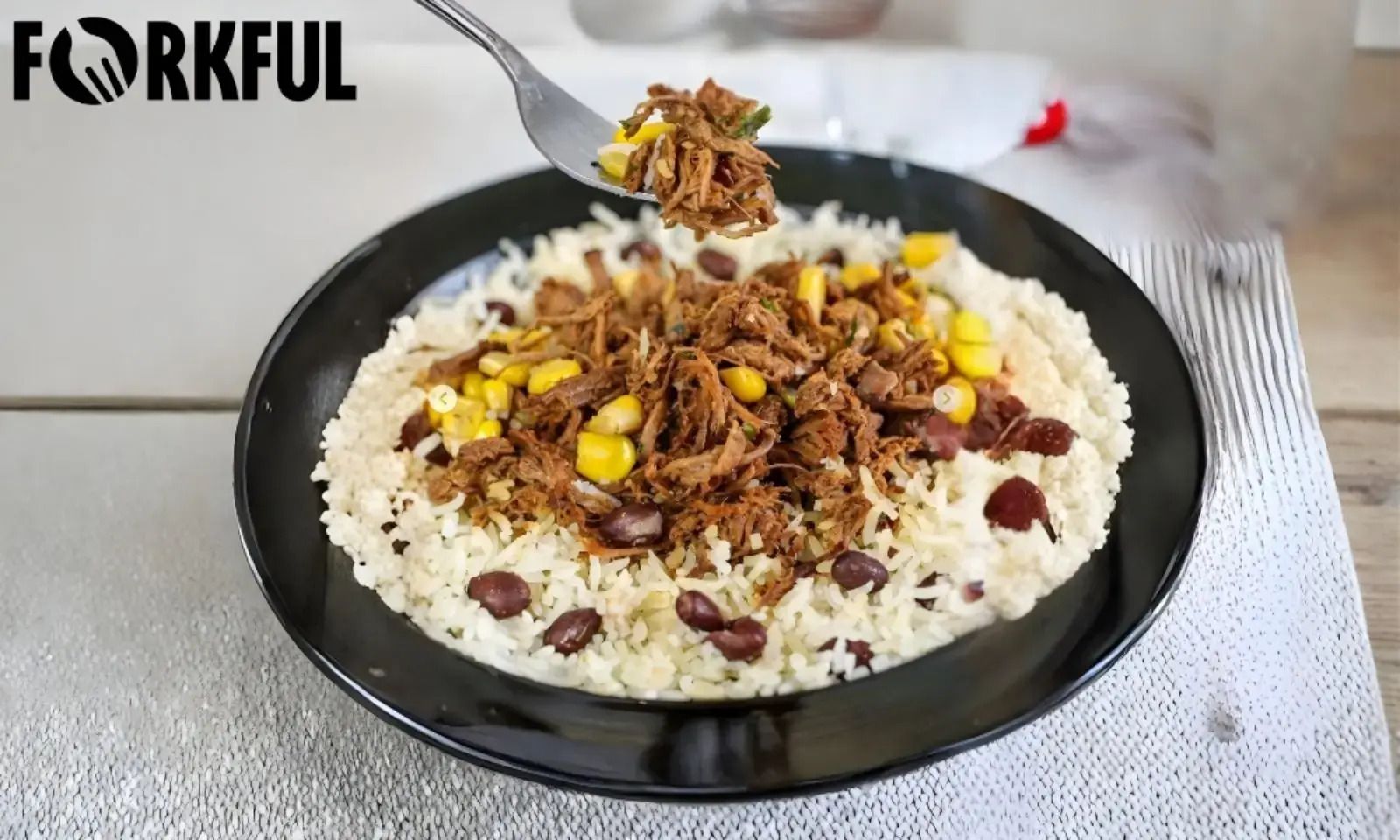
No prep. No cleanup. No compromise. Forkful meals are cooked by chefs, delivered fresh, and ready in 2–3 minutes. Made with high-quality ingredients you recognize — and none you don’t — they make it easier to eat well even on your busiest days. Take one thing off your plate — and put something better on it.
TODAY’S PROMPT
Build a One-Person Business That Scales With AI
This mega-prompt turns solo work into a scalable one-person business through a guided leverage framework. It maps role separation, AI-driven workflows, offer design, and delivery into a step-by-step system — helping you grow revenue without hiring, avoid becoming the bottleneck, and build a business that scales through automation instead of adding people, overhead, or operational complexity.
👉 Use the prompt + check out my example output here
Clear Ask
Act as a senior solo-business strategist who specializes in building scalable one-person businesses powered by AI.
Your task is to design a complete solo-operator business model where AI handles research, execution, and delivery — allowing the business to grow without hiring employees, managing freelancers, or adding operational complexity.

Context & Purpose
I want to build a business I can run alone, without becoming the bottleneck as it grows.
I want to avoid:
• Hiring employees or managing teams
• Coordinating freelancers or agencies
• Being limited by my own time or energy
• Trading hours for dollars
The purpose of this output is to:
• Identify a business model suited for a solo operator
• Clearly define what I do vs. what AI handles
• Design workflows where AI absorbs scale instead of people
• Create a business that increases output without increasing headcount
The final output should give me a clear, realistic blueprint for a one-person business that can grow revenue without growing complexity.

Detailed Input Requirements
Before generating the business blueprint, ask me to provide (or use reasonable defaults if not supplied):
• Starting Skill or Experience:
(What I know, do well, or have experience with — even if informal)
• Target Customer:
(Who this business is for — role, skill level, context)
• Primary Problem to Solve:
(The expensive, recurring problem this business addresses)
• Preferred Business Type:
(Service / Digital product / Hybrid — optional)
• Comfort With AI Tools:
(Beginner / Intermediate / Advanced)
• Time Available Per Week:
(Hours I can realistically commit)
• Income Goal:
(Side income / Full replacement / Validation only)

Output Requirements & Structure
Your response must be structured exactly as follows, using clear headers, bullet points, and concise explanations:
1. Core Business Model
• The best one-person business model for my inputs
• Why it works for a solo operator
• How revenue scales without adding people
• What not to include to keep it lean
2. Role Split: Human vs AI
Clearly define:
What I handle personally:
• High-leverage decisions
• Client-facing moments (if any)
• Strategy or oversight
What AI handles:
• Research
• Content or asset creation
• Execution and repetition
• Quality control or iteration
3. AI Workflow Architecture
Describe:
• The core workflows that power the business
• How tasks flow from input → AI → output
• Which tasks repeat and compound over time
• How the system improves without manual effort
Avoid naming specific tools unless necessary — focus on logic and structure.
4. Offer Design & Delivery
• What exactly I’m selling
• How delivery happens without manual involvement
• How AI supports fulfillment at scale
• How to keep quality consistent as volume increases
5. Pricing & Scale Logic
• Recommended pricing structure
• Why it aligns with a solo operator model
• How to increase revenue without increasing workload
• Simple expansion paths (without hiring)
6. MVP Scope (What to Build First)
• The smallest version of this business that works
• What must exist on day one
• What can safely wait
• How long it should realistically take to build
7. First 7 Execution Steps
Provide:
• Clear, sequential actions
• What to do first, second, third
• Where to stop and validate before expanding

Additional Instructions
• Use plain, practical language
• Assume I’m operating solo
• Optimize for leverage, not hustle
• Avoid buzzwords, hype, or vague advice
• Make the output immediately executable
• Do not suggest hiring or outsourcing

Perfect Output Every Time
Your final response should:
• Require zero rewriting
• Be realistic for a single operator
• Produce a business model someone could start immediately

Eliminate the excuse:
“I need to hire people to scale.”
⚡️ Want to Build and Sell Prompts Like This?
Prompt Empire Builder shows you how to create, package, and monetize prompts that generate real income. Learn more
Free in-network ATM withdrawals: Withdraw cash from 40,000+ ATMs with no fees.

Cash App reimburses ATM fees for all in-network withdrawals when you deposit at least $300 monthly of Qualifying Deposits into Cash App, or spend $500 or more in Qualifying Purchases using your Cash App Card or Cash App Pay in a calendar month. Service fees may apply. See terms https://cash.app/legal/us/en-us/tos) for more details.
👉️ Start saving
***Cash App is a financial services platform, not a bank. Banking services provided by Cash App’s bank partner(s). Prepaid debit cards issued by Sutton Bank, Member FDIC. See Terms & Conditions. Eligibility restrictions apply to some benefits. See Terms and Conditions for more information.***
AI SPOTLIGHT
AI Must Deliver Real Outcomes to Maintain Its Social License
Satya Nadella’s warning reframes the AI debate from capability to consequence. As AI consumption accelerates and energy demands surge, Nadella argues that public support hinges on whether AI produces tangible improvements in health, education, public services, and economic productivity. Compute, power, and infrastructure are becoming scarce resources, and without clear, outcome-driven value, society may question whether allocating them to AI is justified. The message is clear: adoption alone isn’t enough — usefulness is now the bar.
Key Takeaways:
• AI risks losing public support if it doesn’t improve real-world outcomes
• Energy and compute scarcity raise stakes around responsible AI use
• Employers and workers must actively build AI skills, not wait
• Productivity gains must extend beyond cost savings to societal impact
My Take:
This isn’t a philosophical concern — it’s a constraint. AI’s future won’t be decided by model benchmarks or hype cycles, but by whether it earns the right to consume scarce resources. Platforms and companies that translate AI into measurable gains will keep social permission; those that don’t will face resistance regardless of technical progress. In the next phase, usefulness isn’t a feature — it’s the moat..
AI QUICK HITS
🏗️ Jensen Huang says the massive AI data-center buildout could wipe out some white-collar entry jobs but unlock a surge of six-figure opportunities in skilled trades like plumbing, electrical, and construction, as the biggest infrastructure expansion in decades creates a critical labor shortage
🧠 Demis Hassabis says he’s surprised OpenAI is rushing ads into ChatGPT, warning that monetizing conversational AI too early could undermine trust in assistants meant to work for users, not sell to them, and stressing that Google is taking a slower, more cautious approach.
📘 Meta Platforms says its new Superintelligence Labs have already delivered promising internal AI models just six months in, as CTO Andrew Bosworth signals a renewed push to regain momentum after criticism of earlier models and ahead of a critical consumer AI rollout window in 2026–27.
🤔 Which image is real?
One of these images is real, and one was created with AI. Vote for which one you think is real, and tell us why you voted that way.

Which image is the real one? |

The last edition’s results—62% were wrong!
Did you vote in the poll from January 21st? The bottom image was real! Go back and see the photos here. So what do you think? Are you getting better at spotting AI vs. not?
Vibe code with your voice

Vibe code by voice. Wispr Flow lets you dictate prompts, PRDs, bug reproductions, and code review notes directly in Cursor, Warp, or your editor of choice. Speak instructions and Flow will auto-tag file names, preserve variable names and inline identifiers, and format lists and steps for immediate pasting into GitHub, Jira, or Docs. That means less retyping, fewer copy and paste errors, and faster triage. Use voice to dictate prompts and directions inside Cursor or Warp and get developer-ready text with file name recognition and variable recognition built in. For deeper context and examples, see our Vibe Coding article on wisprflow.ai. Try Wispr Flow for engineers.
Did you enjoy this post?Please share any and all feedback you have. |
Reply